The PDCA cycle and ISO standards are closely connected, but their relationship still raises questions among professionals around the world. One of the main reasons is simple: not every ISO standard follows the PDCA approach.
So, which standards use PDCA, and which ones do not?
Understanding this relationship can help us implement better management systems, maintain conformity, and identify opportunities for improvement. In other words, understanding the connection between PDCA and ISO standards is much more than a matter of curiosity—it is an important competency for management system professionals.
Without this understanding, organizations can lose sight of the bigger picture, create unnecessary bureaucracy, and even turn management systems and audits into exercises focused solely on finding mistakes.
When that happens, it becomes much harder to demonstrate the value of management systems to top management, and areas such as Quality, Environmental Management, Occupational Health and Safety, and others may lose influence within the organization.
So, let’s take a closer look at the relationship between PDCA and ISO standards and understand how this concept supports effective management systems that go beyond simply meeting requirements to create culture and deliver meaningful results.
A Quick Review: What Is PDCA?
Before exploring the relationship between PDCA and ISO standards, let’s review the concept itself.
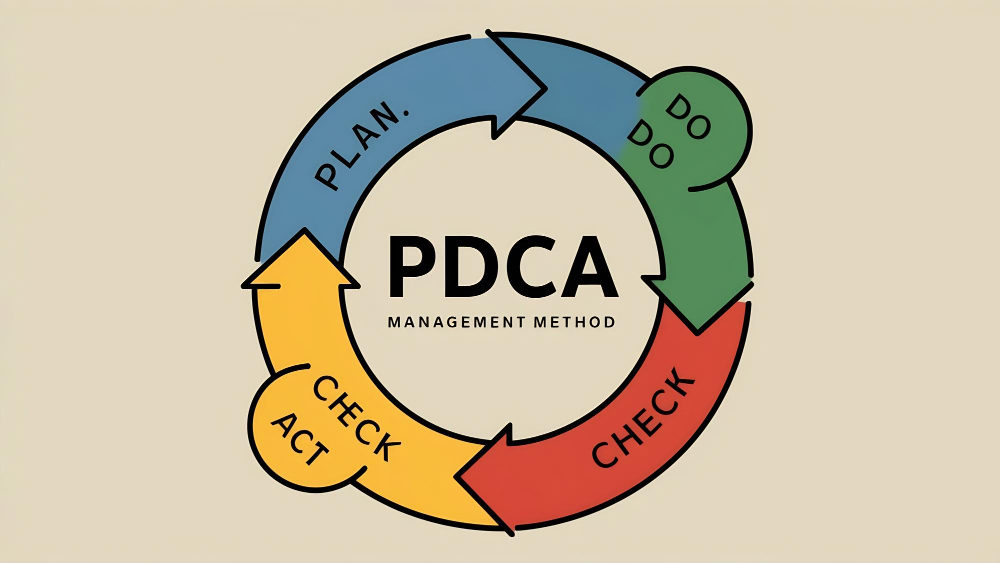
PDCA is a management methodology used to organize processes, projects, and actions around a cycle of continual improvement.
It consists of four stages:
- Plan: Establish objectives and determine the actions needed to achieve them.
- Do: Implement what was planned.
- Check: Monitor, measure, and evaluate the results.
- Act: Take action to address problems, make adjustments, and promote improvement.
This already tells us something important: PDCA is designed around a cyclical approach.
It works particularly well for activities and systems that need to be planned, implemented, evaluated, and continually improved.
For this reason, the PDCA logic may be very clear in some ISO standards while being unnecessary or inappropriate for others.
ISO Standards Structured Around PDCA
PDCA is cyclical, relatively easy to understand, widely applicable, and adaptable to different organizational contexts.
These characteristics make it particularly suitable for implementing, maintaining, and improving management systems.
This is why PDCA is closely associated with many ISO Management System Standards (MSS), particularly those aligned with ISO’s Harmonized Structure.
In these standards, management system requirements can generally be understood within the Plan-Do-Check-Act logic.
For example:
- ISO 9001 – Quality Management Systems (QMS)
- ISO 14001 – Environmental Management Systems (EMS)
- ISO 37001 – Anti-Bribery Management Systems (ABMS)
- ISO 45001 – Occupational Health and Safety Management Systems (OH&S MS)
- And many other Management System Standards
In practical terms, these management systems include activities associated with planning, implementation and operation, performance evaluation, and improvement.
The PDCA cycle therefore provides a useful way to understand how different management system requirements work together as an integrated system rather than as a collection of isolated clauses.
This is one of the main reasons the relationship between PDCA and ISO Management System Standards is so widely discussed.
ISO Standards That Are NOT Structured Around PDCA
Not every ISO standard is structured around the PDCA cycle.
Why?
Because not every ISO standard establishes a management system that needs to operate as a continual cycle of planning, implementation, evaluation, and improvement.
Consider ISO 8601, for example.
The ISO 8601 series addresses representations of dates and times. Its purpose is fundamentally different from that of a management system standard such as ISO 9001 or ISO 14001.
Trying to structure ISO 8601 around PDCA would therefore make little sense.
Another example can be found in standards that establish technical specifications, methods, terminology, measurements, or other technical parameters.
Consider the ISO 3046 series, which addresses reciprocating internal combustion engines and includes technical requirements and methods related to engine performance.
Standards of this type may be used within an organization’s processes and may even support activities that are part of a management system.
For example, a technical standard could establish criteria used during process monitoring or operational control.
But that does not mean the technical standard itself is structured as a continual management system based on PDCA.
Understanding this distinction helps organizations apply both PDCA and ISO standards more appropriately.
PDCA and ISO Standards: What’s the Bottom Line?
The key principle is simple: don’t generalize.
Not every ISO standard is based on PDCA, and PDCA is certainly not exclusive to ISO standards.
ISO publishes many different types of standards and other normative documents, covering everything from Management System Standards to technical requirements, specifications, terminology, test methods, guidelines, and highly specialized industry applications.
For this reason, whenever we work with an ISO standard, we first need to understand what that particular standard is intended to accomplish.
For many Management System Standards, PDCA provides an underlying logic for how the system is planned, implemented, evaluated, and continually improved.
For technical standards, specifications, and other normative documents, that relationship may be indirect—or it may not exist at all.
Ultimately, PDCA is not associated with a standard simply because the document has “ISO” in its name.
Its relevance comes from the way certain management systems are designed to operate: Plan, Do, Check, and Act.
Understanding this distinction is especially important for quality and management system professionals because it prevents a mechanical interpretation of standards.
Instead of simply memorizing requirements and trying to force every clause into the PDCA cycle, professionals should understand the purpose of the standard, its structure, and how its requirements are intended to create value for the organization.
That is one of the key differences between a living management system that delivers results and a system that exists primarily as documentation and bureaucracy.