
ISO 9001:2026 has now been published, sparking a great deal of discussion, curiosity, and even some anxiety about the new requirements and what they mean for organizations.
With the final edition available, organizations can now assess the changes and identify what they need to address. The published standard provides the reference for understanding and implementing the updated requirements.
In this article, we’ll provide an overview of the most significant changes and what they mean for Quality Management Systems (QMS).
The standard includes important updates with the potential to increase QMS maturity. However, ISO 9001:2026 is far from being a complete revolution like the transition to ISO 9001:2015 was.
Quality Culture and Ethical Behavior
One important change is the formal inclusion of quality culture and ethical behavior within the standard, giving these concepts greater visibility within the QMS.
Top management now has a more explicit role in promoting a quality culture and ethical behavior.
The intention is not simply to create another policy, code of ethics, or documented procedure.
Instead, the focus is on how people actually behave and make decisions in their day-to-day activities—and how those behaviors influence conformity and customer satisfaction.
This allows auditors, for example, to evaluate whether the values an organization communicates are actually reflected in its practices.
Under ISO 9001:2026, organizations need to pay greater attention to how employees respond to situations involving errors, nonconformities, complaints, objectives, defective products, and decisions in which quality considerations may compete with other performance pressures.
Quality culture needs to be more than a statement on a wall. It should be evident through the organization’s values, behaviors, attitudes, and decisions.
A Clearer Separation Between Risks and Opportunities
Risk management, formally strengthened in the 2015 edition through risk-based thinking, also receives an important update.
ISO 9001:2026 provides a clearer distinction between risks and opportunities, including separate treatment within the planning requirements.
This distinction was already inherent in ISO 9001:2015, but the new structure makes it more explicit: risks relate to potential undesirable effects, while opportunities relate to potential beneficial effects relevant to the QMS, its intended results, and customer satisfaction.
As a result, organizations need to give risks and opportunities distinct consideration rather than treating them as interchangeable concepts.
This also reinforces the idea of opportunity-based thinking, complementing the risk-based thinking already familiar to ISO 9001 users.
The intention is to encourage organizations not only to prevent undesirable outcomes, but also to actively identify opportunities arising from changes, feedback, complaints, nonconformities, performance information, and other sources.
In other words, a mature QMS should not only ask, “What could go wrong?” It should also ask, “What could we improve or take advantage of?”
Stronger Change Management – Clause 6.3
Another important enhancement involves the requirements for planning changes, an area already addressed in ISO 9001:2015.
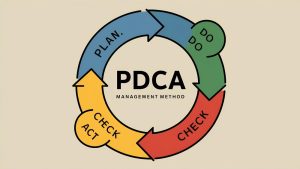
In ISO 9001:2026, change management is more structured and can be understood through an approach similar to applying PDCA—Plan, Do, Check, Act—to organizational change.
Organizations need to carefully plan changes that may affect the QMS, considering factors such as resources, potential impacts, and intended results.
This means that significant changes should not simply be implemented and forgotten. Organizations should plan them, implement them in a controlled manner, evaluate their effects, and take appropriate action based on the results.
Consider, for example, the adoption of Artificial Intelligence (AI) within organizational processes.
From a change management perspective, simply implementing an AI tool is not enough.
The organization should consider how the technology may affect the QMS, processes, responsibilities, product or service conformity, customer requirements, and associated risks and opportunities.
The results of the change should then be monitored to determine whether the intended outcomes are actually being achieved.
Once again, this change largely clarifies and strengthens concepts that were already present in the previous edition.
Expanded and Revised Annex A
One of the most significant developments in the new edition involves Annex A.
Annex A provides clarification and additional information to support the understanding of ISO 9001 requirements.
In ISO 9001:2026, this annex has been significantly expanded and further developed, providing additional explanations and examples intended to make the standard easier to understand and apply.
During the revision process, there was considerable discussion about whether this type of implementation guidance would be better addressed through ISO 9002, which provides guidance on applying ISO 9001.
The published edition includes an expanded Annex A, bringing additional interpretive support directly into ISO 9001 itself.
An important distinction remains: Annex A does not create additional requirements.
Instead, it helps users better understand the intent behind the requirements and provides additional context for their application.
In this sense, the revised Annex A brings ISO 9001 somewhat closer to practical implementation guidance, providing valuable support for organizations and professionals working with the standard.
ISO 9001:2026 – When Revolution Gives Way to Maturity
Looking at ISO 9001:2026 as a whole, the central message is relatively clear: this revision is not a revolution like the 2015 edition.
Instead, it represents an evolution of the concepts introduced and strengthened in the previous edition.
There are relatively few major structural changes to the requirements, but several of the conceptual changes are significant.
Together, they raise expectations regarding the maturity of Quality Management Systems certified to ISO 9001:2026.
That emphasis on maturity is a defining characteristic of the new edition.
Beyond adding or clarifying requirements, ISO 9001:2026 seeks to improve the quality and maturity of what organizations are already doing.
The focus moves beyond simply “having a QMS that works” and places greater emphasis on how organizations make decisions, address risks and opportunities, manage change, and build a quality culture.
Topics such as quality culture, ethical behavior, opportunity-based thinking, and change management therefore take on greater relevance.
More than ever, simply demonstrating that documented processes exist is not enough. Organizations need to demonstrate that their Quality Management Systems effectively contribute to achieving intended results and improving performance.
ISO 9001:2026 also continues to move away from the outdated perception of quality management as empty bureaucracy.
The standard encourages organizations to develop QMSs that are more mature, coherent, effective, and connected to the realities of the business.
If ISO 9001:2015 represented a major transformation in how organizations approach quality management, ISO 9001:2026 takes the next step:
less revolution, more maturity.