
As time goes by, more and more ISO 9001 certified companies are achieving strong results and building economically sustainable businesses. Yet one myth continues to persist: “Certification is just bureaucracy.”
This perception exists because many professionals and organizations still view ISO 9001 certification merely as a customer requirement or market formality—something that must be done solely to satisfy a contractual or administrative requirement.
However, the real difference is not the certificate itself. The certificate is simply the outcome. What truly matters is how an organization operates, manages its processes, and makes decisions.
ISO 9001 certified companies are not perfect, but they typically avoid many poor management practices that affect other organizations. And that is exactly what we will explore in this article.
Let’s look at some of the practices commonly adopted by ISO 9001 certified organizations and understand why Quality Management is not about bureaucracy—it is about performance, consistency, and results.
1 – They Actively and Systematically Listen to Customers
One of the most important characteristics of ISO 9001 certified companies is that they don’t wait for customers to complain.
Instead, these organizations establish processes and activities to proactively monitor customer satisfaction and gather feedback.
After all, customers are ultimately the ones who keep a business running.
ISO 9001 encourages organizations to monitor customer perceptions through satisfaction surveys, complaint management, direct feedback, and other methods that help identify customer expectations and market trends.
As a result, organizations gain a better understanding of what their customers need and expect. This reduces the risk of becoming disconnected from the market and helps identify new business opportunities.
2 – They Manage Risks Before They Become Problems
Most professionals have experienced an “I told you so” situation—a potential problem was identified, but no action was taken until it actually occurred.
ISO 9001 certified companies take a more proactive approach.
They establish processes to identify and address risks and opportunities before problems occur.
This approach is known as risk-based thinking. It encourages organizations to anticipate potential issues and plan appropriate actions to prevent or reduce undesirable effects.
This shift in mindset can help prevent errors, failures, disruptions, and other problems before they affect customers or business performance.
3 – They Address Problems Systematically
Recurring problems are common in organizations without structured management processes.
The same failure may be “fixed” repeatedly, only to return a few days or weeks later.
ISO 9001 certified organizations are expected to go beyond correcting the immediate problem. They investigate why it happened.
By identifying the root cause of a nonconformity, organizations can implement corrective actions designed to prevent recurrence.
Rather than constantly putting out fires, the objective is to understand why the fire started and eliminate the conditions that allowed it to happen.
4 – They Regularly Evaluate Their Own Performance
Organizations cannot effectively improve what they do not monitor.
Some businesses struggle to understand whether their processes are performing as expected, whether objectives are being achieved, or whether operational results are sustainable.
ISO 9001 certified companies establish mechanisms to systematically evaluate their performance.
They may use:
- Internal audits
- External audits
- Key Performance Indicators (KPIs)
- Management reviews
- Performance monitoring and measurement
- Data analysis
These practices allow organizations to identify deviations, make adjustments, and base decisions on evidence rather than assumptions.
They also encourage a process-focused culture in which organizations investigate systems and processes instead of simply blaming individuals when something goes wrong.
5 – They Clearly Define Roles and Responsibilities
In well-structured Quality Management Systems, people understand their roles, responsibilities, and authorities.
Instead of confusion over “who does what,” there is greater clarity regarding ownership and accountability.
Even when organizations encounter new situations, established processes help ensure that problems, complaints, risks, and opportunities are directed to the appropriate people.
This clarity contributes to more predictable and stable processes while simplifying training, communication, and improvement activities.
The result is greater efficiency and fewer errors, failures, delays, rework, and waste.
6 – They Truly Promote Continual Improvement
One of the fundamental concepts behind ISO 9001 is continual improvement.
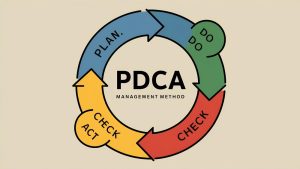
The standard follows the logic of the PDCA cycle—Plan, Do, Check, Act—which provides a systematic approach for planning activities, implementing them, evaluating results, and taking action to improve performance.
ISO 9001 certified organizations continually review their processes.
They look for opportunities to increase efficiency, learn from mistakes, prevent problems, and improve performance.
Over time, improvement becomes more than an isolated initiative. It becomes part of how the organization operates.
ISO 9001 Certification Isn’t the Engine—It’s the GPS
For ISO 9001 certified organizations, the certificate itself is simply the visible result of a much broader management system.
The certificate is only the tip of the iceberg.
What truly differentiates these organizations lies beneath the surface: robust and consistent processes, evidence-based decision-making, genuine customer focus, risk management, clearly defined responsibilities, and a commitment to continual improvement.
Ultimately, certification does not transform an organization by itself. Instead, it provides external recognition that a structured management system has been implemented and maintained.
Think of ISO 9001 as a navigation system on a long journey.
It isn’t the engine and it doesn’t move the organization forward on its own. But it provides structure and direction, helping the organization stay on course, identify deviations, and make the adjustments necessary to reach its objectives.